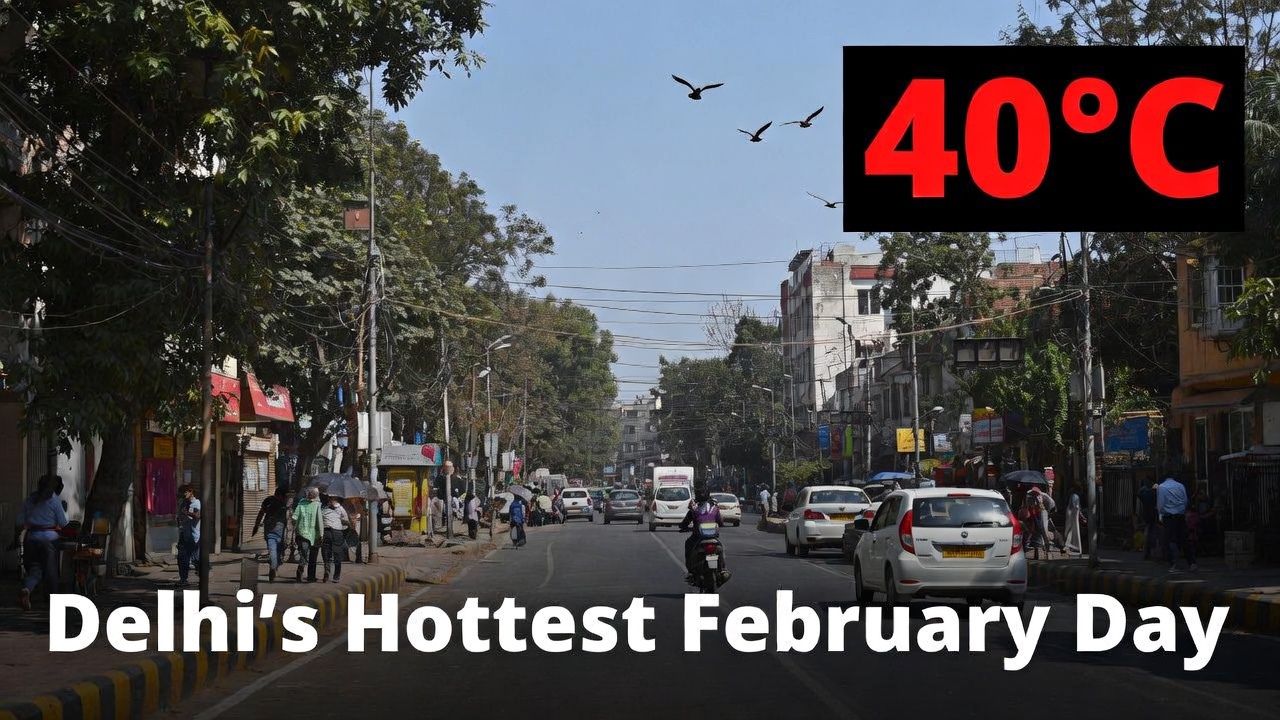
Today Delhi Records Hottest February Day – Delhi experienced its hottest day of 2026 on February 16, with temperatures soaring to 31.6 degrees Celsius at the Safdarjung observatory—7.2 degrees above normal for mid-February. Delhi AQI settled at 258 in the ‘poor’ category, creating dual challenges of unseasonable heat and elevated air pollution levels affecting residents across the National Capital Region.
The India Meteorological Department reported a sharp 24-hour temperature increase of 3.1 degrees, indicating a sudden warm spell. Other monitoring stations recorded similarly high readings, with Lodi Road at 29.2 degrees Celsius and Ridge at 28.4 degrees Celsius, both significantly above seasonal norms.
Why This Matters Today
The combination of record February heat and poor Delhi air quality index creates health risks for vulnerable populations including children, elderly residents, and those with respiratory conditions. Clear skies and low wind speeds contribute to both warmer afternoons and stagnant air that traps pollutants, intensifying Delhi air pollution concerns.
Outdoor workers, commuters, and students face increased exposure during peak afternoon hours when temperatures and pollution levels reach their highest. The unusual weather pattern disrupts normal seasonal expectations for mid-February.
Temperature Patterns Across Monitoring Stations
While maximum temperatures climbed well above normal, minimum temperatures remained near or below average across most stations. Ayanagar recorded the lowest at 9.4 degrees Celsius, 1.5 degrees below normal. Safdarjung and Lodi Road logged minimums of 10.1 degrees Celsius and 10.4 degrees Celsius respectively.
Palam and Ridge recorded slightly higher minimums at 11.6 degrees Celsius and 11.8 degrees Celsius. All five reporting stations—Safdarjung, Palam, Lodi Road, Ridge, and Ayanagar—recorded zero rainfall during the monitoring period.

What Weather Experts Said
Skymet Weather Vice-President Mahesh Palawat described Delhi being this hot in mid-February as an unusual phenomenon. He attributed conditions to clear skies resulting from low wind speed, which produces bright sunny afternoons.
Palawat stated the pattern will continue for one to two days, with minimum temperatures also expected to rise. He noted a slight chance of scattered rain due to an approaching western disturbance, which may bring relief from both heat and pollution.
Air Quality Concerns
According to Central Pollution Control Board standards, Delhi’s weather combined with stagnant air has kept the Air Quality Index at 258, firmly in the ‘poor’ category. This level indicates moderate health impacts for sensitive groups during prolonged outdoor exposure.
Low wind speeds preventing pollutant dispersal compound the heat effect. Poor air quality combined with higher temperatures intensifies respiratory discomfort for those with pre-existing conditions.
What This Means for Residents
Delhi residents should limit outdoor activities during peak afternoon hours when both temperature and Delhi air pollution levels are highest. Those with asthma, chronic obstructive pulmonary disease, or heart conditions should take extra precautions.
Parents should monitor children’s outdoor play time and ensure adequate hydration. Morning and evening hours offer relatively cooler temperatures and marginally better air quality for necessary outdoor activities.
Workers in outdoor occupations including construction, traffic management, and delivery services face increased heat stress and pollution exposure. Frequent breaks in shaded or air-conditioned spaces are advisable.
Delhi Records Hottest February Day – What will happen in the upcoming days
Weather patterns are expected to remain similar for the next one to two days with continued above-normal maximum temperatures. The approaching western disturbance may bring scattered rainfall, potentially lowering both temperatures and pollution levels by week’s end.
Residents should monitor daily weather forecasts and Delhi AQI readings before planning outdoor activities. Using air-conditioned indoor spaces during peak heat hours and wearing N95 masks during poor air quality episodes remains advisable until conditions improve.

Nidhi Kapoor is an environmental journalist and air pollution monitoring expert with 8 years of experience. She specializes in collecting, analyzing, and interpreting air quality data to identify pollutant sources and their impact on public health. Through her investigative reporting, Nidhi develops insights and advocates for evidence-based solutions to reduce atmospheric contamination.