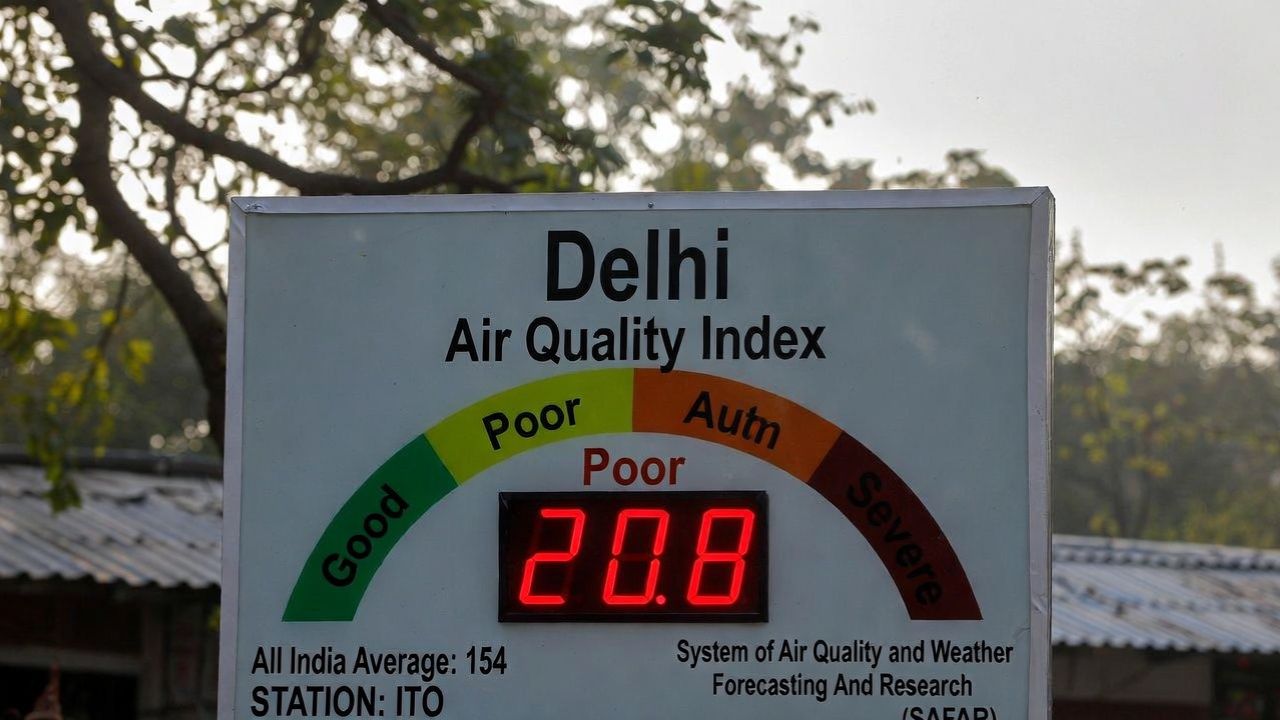
New Delhi, February 19, 2026: The national capital’s struggle with air pollution saw a fresh setback on Thursday evening. After a brief “Moderate” spell in the morning, the air quality slipped back into the ‘Poor’ category, with the city recording an average Air Quality Index (AQI) of 208 at 4:00 PM.
The Evening Dip: Why Did the AQI Rise?
While the city woke up to an encouraging AQI of 164 (Satisfactory/Moderate range) following Wednesday’s light rain, the relief was short-lived. Experts suggest that a significant decrease in wind speed during the afternoon allowed local pollutants to settle back over the city.
Hotspot Watch: Delhi Area-Wise AQI Breakdown
While the city average stands at 208, several industrial and high-traffic “hotspots” are recording much higher levels of PM10 and PM2.5. According to the latest evening station data:

| Location (Hotspot) | AQI Level (Evening) | Category |
| Anand Vihar | 249 | Poor (High) |
| Mundka | 203 | Poor |
| Chandni Chowk | 227 | Poor |
| Jahangirpuri | 201 | Poor |
| Okhla Phase-2 | 207 | Poor |
Anand Vihar remains one of the most affected areas due to its proximity to the interstate bus terminal and high construction activity.
Weather Forecast: A “Warm” February Ahead
The India Meteorological Department (IMD) has issued a warning regarding rising temperatures. Today, the maximum temperature touched 28.0°C, which is nearly 4 degrees above the seasonal average.
What to expect in the next 72 hours:
- Temperature Spike: The mercury is expected to continue its upward climb, likely touching 30°C to 31°C by the weekend.
- Morning Mist: While skies will remain mainly clear during the day, mist is expected during the early morning hours.
- No Rain: No further rainfall is predicted for the next week, which may lead to a gradual increase in dust accumulation.
Conclusion: Caution Advised for Sensitive Groups
With the AQI returning to the ‘Poor’ zone, health experts advise people with respiratory conditions, children, and the elderly to avoid prolonged outdoor exertion during the evening hours when pollutant concentration is highest.

Nidhi Kapoor is an environmental journalist and air pollution monitoring expert with 8 years of experience. She specializes in collecting, analyzing, and interpreting air quality data to identify pollutant sources and their impact on public health. Through her investigative reporting, Nidhi develops insights and advocates for evidence-based solutions to reduce atmospheric contamination.