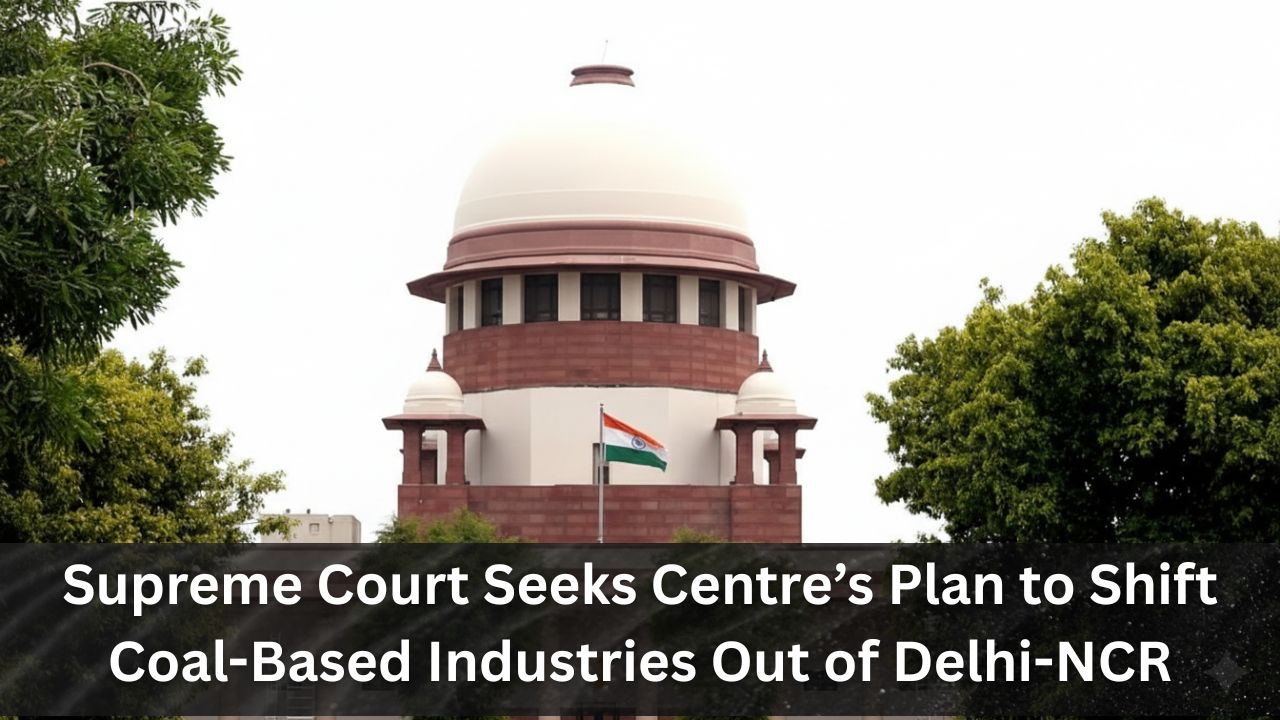
NEW DELHI – In a significant move to tackle the persistent air quality crisis in the National Capital Region (NCR), the Supreme Court of India on Monday, February 23, 2026, directed the Union government to formulate a concrete plan for relocating all coal-based industries out of the region.
A bench led by Chief Justice of India Surya Kant, along with Justices Joymalya Bagchi and Vipul M. Pancholi, emphasized that the time for temporary fixes has passed. The Court has now shifted its focus toward systemic, long-term structural reforms recommended by the Commission for Air Quality Management (CAQM).
Key Directives from the Bench
- Phasing Out Coal: The Ministry of Environment, Forest and Climate Change (MoEFCC), the Ministry of Power, and the Ministry of Petroleum and Natural Gas (MoPNG) must submit a joint proposal identifying coal-based industries in the NCR and determining viable alternative fuel sources for them.
- New Plant Prohibition: The Court is considering a proposal to ban the establishment of any new coal-based thermal power plants within a 300-km radius of Delhi.
- State-Level Action: The governments of Uttar Pradesh, Haryana, and Rajasthan have been ordered to issue public notices inviting suggestions and objections from all stakeholders, including the industries themselves. These states must submit a detailed “Action Taken Plan” based on the feedback received.
- Implementation Roadmap: The Government of NCT of Delhi (GNCTD) has been specifically directed to submit a roadmap to implement long-term pollution control measures previously identified by the CAQM.
What This Means for Residents
This judicial intervention aims to address the root causes of pollution rather than relying solely on reactive, seasonal measures like the Graded Response Action Plan (GRAP). By targeting industrial stack emissions—a major contributor to secondary particulate formation—the Court hopes to achieve a measurable improvement in the annual average Air Quality in the capital.

Looking Ahead
The Supreme Court has set a firm deadline for all stakeholders to file their status reports and proposals before the next hearing, scheduled for March 12, 2026. During that session, the bench will also examine the CAQM’s specific recommendations for curbing vehicular emissions and managing dust pollution from construction and demolition activities.
Frequently Asked Questions
Why is the Supreme Court targeting coal-based industries now? Coal-based industries contribute significantly to industrial stack emissions. Phasing them out or transitioning them to cleaner fuels is considered essential to reducing the region’s overall PM levels.
What is the role of the CAQM in this process? The CAQM acts as the primary expert body responsible for coordinating pollution control policies across NCR states. The Court is ensuring that the government formally implements the long-term recommendations previously drafted by the Commission.
What will happen to the industries identified for relocation? The Court has directed the Union ministries to identify these industries first and determine feasible alternative fuel sources to ensure that their operations can continue without relying on coal.
When is the next update on this issue? The Supreme Court has scheduled the next hearing for March 12, 2026, to review the status reports from the Centre, the Delhi government, and the NCR states.

Nidhi Kapoor is an environmental journalist and air pollution monitoring expert with 8 years of experience. She specializes in collecting, analyzing, and interpreting air quality data to identify pollutant sources and their impact on public health. Through her investigative reporting, Nidhi develops insights and advocates for evidence-based solutions to reduce atmospheric contamination.