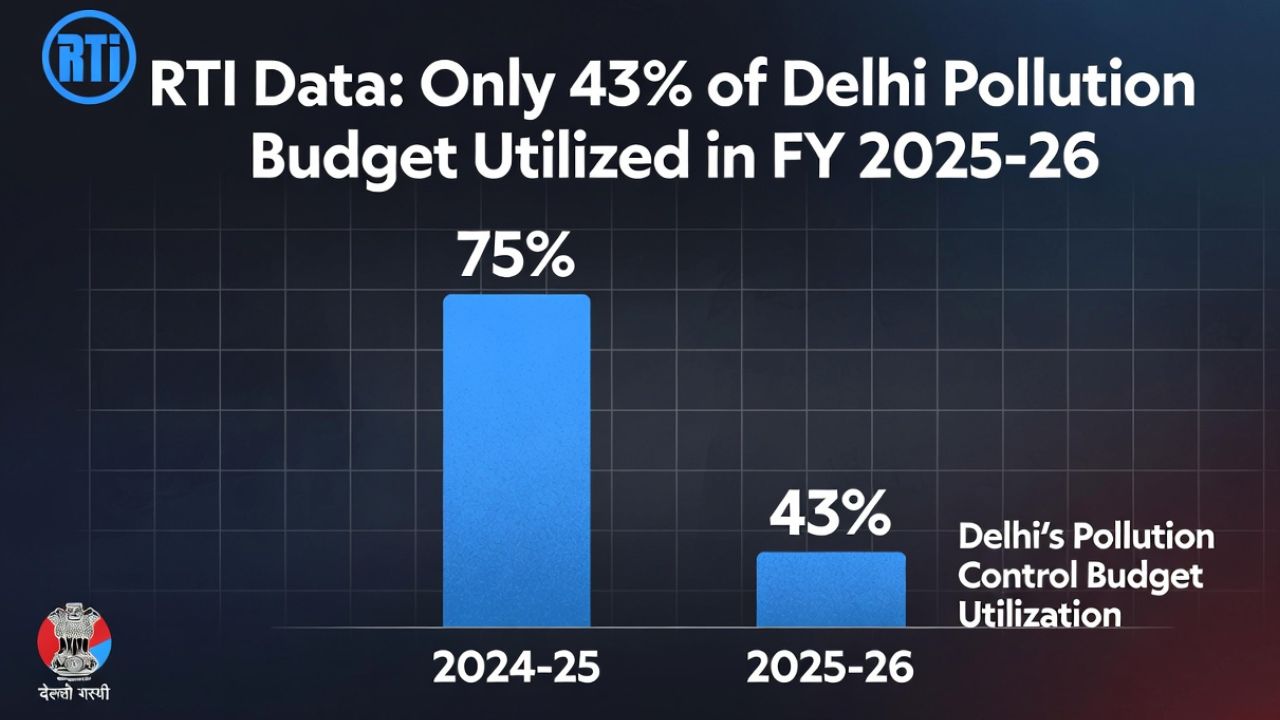
NEW DELHI: A recent Right to Information (RTI) disclosure has revealed that as of January 20, 2026, the Delhi government has utilized only 43% of the ₹300 crore budget allocated for Delhi pollution control and emergency measures. This report highlights significant gaps in the deployment of funds intended to combat the capital’s persistent air quality crisis during the current fiscal year.
Budget Execution and Spending Trends
According to the RTI reply from the Delhi Environment Department, the government has spent ₹129.83 crore out of the total ₹300 crore allocation. The majority of this expenditure was directed toward short-term mitigation efforts. Specifically, ₹23.37 crore was utilized for installing mist spray systems on electric poles and central verges, while ₹58.83 crore was spent on hiring 200 truck-mounted anti-smog guns. An additional ₹47.12 crore was attributed to the procurement of a separate batch of anti-smog guns from the previous fiscal year.
Gaps in Infrastructure and Research
The disclosure indicates a concerning trend regarding long-term environmental projects, with several critical allocations recording zero expenditure as of January 20. Funds earmarked for the Delhi Pollution Control Committee for groundwater remediation (₹70 crore) and for the Municipal Corporation of Delhi to engage mechanical road sweeping machines and water sprinklers (₹64.40 crore) remained entirely unutilized. Additionally, projects involving e-waste management and real-time pollution source apportionment studies have seen no financial progress to date.

Regulatory Oversight and Coordination
The Environment Department stated that it coordinates with multiple agencies, including the Delhi Development Authority and various urban local bodies, to implement air pollution mitigation strategies. Officials indicated that the government conducts regular senior-level review meetings and has constituted an implementation committee to monitor actions taken by these agencies and address any bottlenecks in fund disbursement.
Financial Status Snapshot (as of Jan 20, 2026)
| Category | Allocated Budget (₹) | Utilization Status |
| Total Pollution Control Budget | ₹300 Crore | ₹129.83 Crore (43%) |
| Groundwater Remediation | ₹70 Crore | Zero |
| Mechanical Road Sweeping | ₹64.40 Crore | Zero |
| Real-time Source Apportionment | ₹1.75 Crore | Zero |
What This Means for Residents
The under-utilization of funds for mechanical sweeping and groundwater restoration means that planned upgrades to urban pollution control infrastructure may be delayed. For residents, this suggests a continued reliance on reactive, short-term measures—like anti-smog guns—rather than the structural improvements required to address the root causes of poor air quality.
What Happens Next
As the fiscal year draws to a close, pressure is mounting on implementing agencies to accelerate the deployment of the remaining budget. With the Supreme Court recently calling for long-term strategies, such as the potential relocation of coal-based industries, the transparency and efficiency of how these environmental funds are managed will remain a critical focal point for public oversight.

I’am Siddharth a Air pollution analysts are environmental expert who collect, analyze, and interpret air quality data to identify pollutant sources & develop solutions for reducing atmospheric contamination.