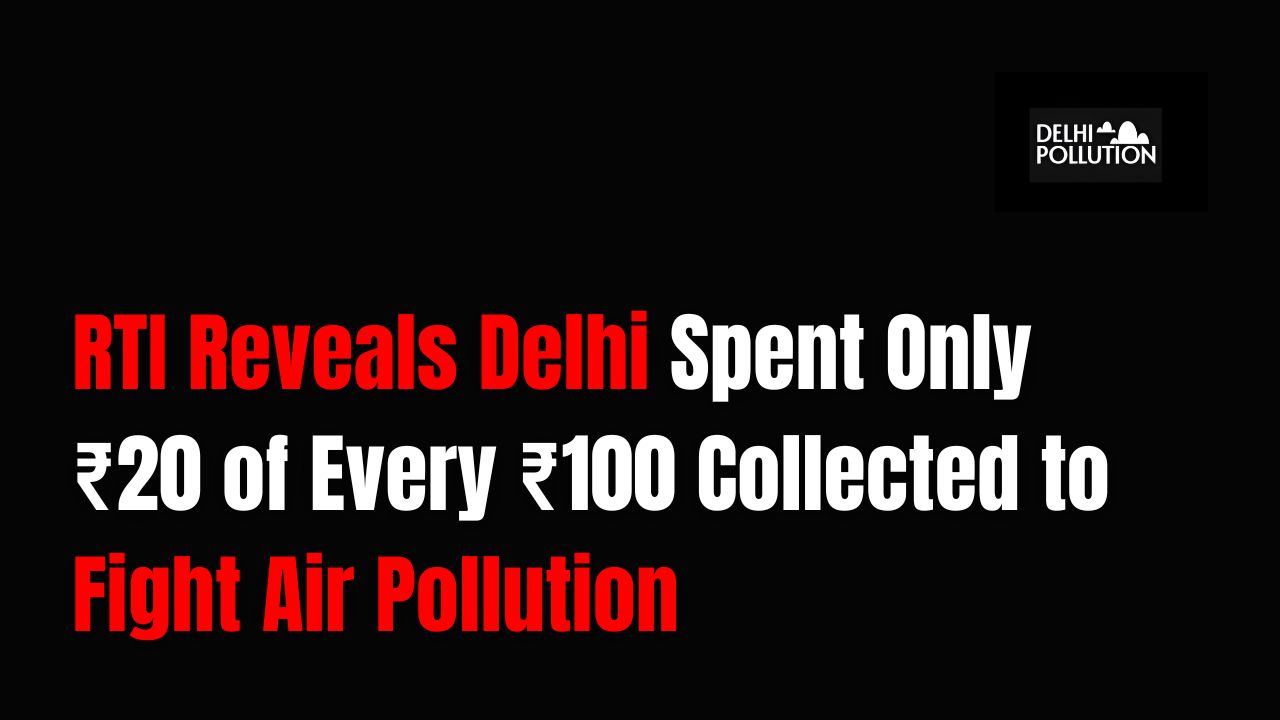
RTI Reveals Delhi — An exclusive Right to Information (RTI) query has revealed that the Delhi government utilized only a small fraction of the funds collected specifically to combat air pollution over the last seven years. Between 2017 and 2024, the city spent just ₹20 for every ₹100 collected through the Environment Compensation Charge (ECC) and the Air Ambience Fund, leaving a massive surplus unused despite consistent Delhi Air Quality challenges.
What Authorities Said
According to the report from News18, the RTI data provided by the Delhi Pollution Control Committee (DPCC) and the Transport Department shows that a total of ₹2,125 crore was collected through various green cesses. However, the article states that only ₹425 crore—approximately 20%—was actually disbursed for pollution mitigation projects.
The breakdown of the funds mentioned in the report (RTI Reveals Delhi) includes:
- Environment Compensation Charge (ECC): Collected from heavy vehicles entering Delhi. Of the ₹1,500 crore collected, only ₹300 crore was used, primarily for the Regional Rapid Transit System (RRTS).
- Air Ambience Fund: Derived from a 25-paisa cess on every litre of diesel sold in the capital. Out of ₹625 crore collected, only ₹125 crore was spent on subsidies for electric vehicles and battery-operated e-rickshaws.
- Unspent Balance: More than ₹1,700 crore remains idle in government accounts as of March 2024.
What This Means for Residents
Based on the details provided in the report, the underutilization of these funds has direct implications for the Delhi-NCR and its fight against toxic smog:
- Delayed Infrastructure: Projects intended to bypass heavy traffic and transition to cleaner public transport have faced funding delays despite the availability of dedicated cash reserves.
- EV Subsidy Bottlenecks: While the Air Ambience Fund was designed to push for a faster transition to electric mobility, the slow rate of spending suggests that many potential EV buyers may have faced delays in receiving government incentives.
- Monitoring Gaps: The report highlights that a portion of the unused funds was earmarked for installing more smog towers and real-time source apportionment sensors, which are critical for tracking the Real-time Delhi AQI but have seen limited expansion.
The article states that environmental activists have criticised the “lack of political will” to deploy these funds effectively, especially during the peak pollution months of October to January, when the city’s air routinely falls into the “severe” category.

RTI Reveals Delhi: Fight Air Pollution (FAQ)
How much money has Delhi collected to fight air pollution?
According to the RTI Reveals Delhi Report, the Delhi government collected a total of ₹2,125 crore through the Environment Compensation Charge and the Air Ambience Fund between 2017 and 2024.
What percentage of the pollution funds was actually spent?
The report (RTI Reveals Delhi) that only about 20% of the collected funds (₹425 crore) was spent, meaning ₹80 out of every ₹100 remained unutilized.
Where was the spent money used?
The funds that were utilized went toward the Regional Rapid Transit System (RRTS) and subsidies for electric vehicles and e-rickshaws.
What is the Air Ambience Fund?
It is a dedicated fund created by a 25-paisa cess on every litre of diesel sold in Delhi, intended to fund clean air initiatives.
We have shared all information with verified sources, and also mention source on RTI Reveals Delhi. If you have any question then feel free to write us at out Contact us.

Nidhi Kapoor is an environmental journalist and air pollution monitoring expert with 8 years of experience. She specializes in collecting, analyzing, and interpreting air quality data to identify pollutant sources and their impact on public health. Through her investigative reporting, Nidhi develops insights and advocates for evidence-based solutions to reduce atmospheric contamination.