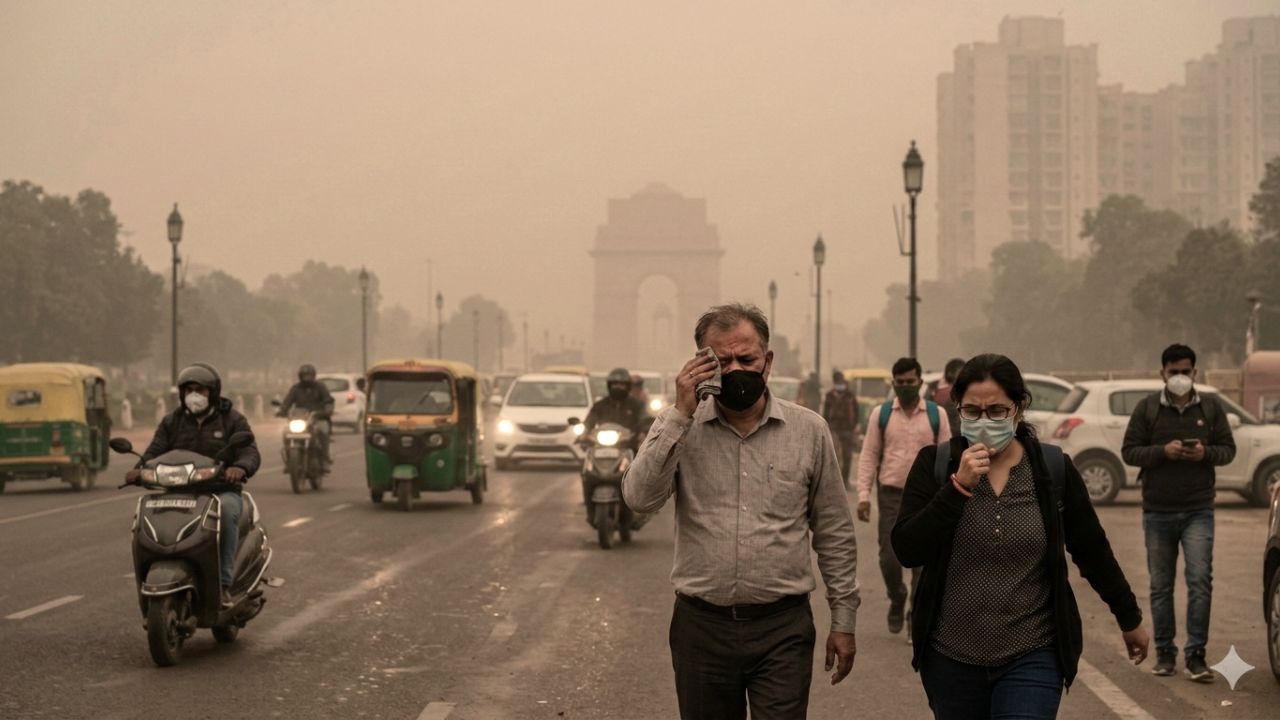
NIMLI, RAJASTHAN — Breathing toxic air is now 16 times more lethal than the COVID-19 pandemic in India, leading pediatrician Dr. Sanjeev Bagai revealed today during the Anil Agarwal Dialogue (AAD) 2026. Speaking at the event organized by the Centre for Science and Environment (CSE), Bagai highlighted a staggering public health crisis, noting that while COVID-19 claimed approximately 600,000 lives in India over four years, annual deaths linked to air pollution have far surpassed those figures, reaching between 2 to 3 million per year nationwide.
The Health Toll: A Generation at Risk
The data presented today underscores a silent emergency that impacts every demographic, with children and long-term residents of urban centers like Delhi facing the highest risks. According to Dr. Bagai, living in Delhi for 30 years can reduce an individual’s life expectancy by nearly 11 years.
Medical evidence cited from the Lung Foundation of India indicates that 30% of children in the national capital already suffer from irreversible lung damage. The implications extend beyond respiratory issues, with experts linking prolonged exposure to PM2.5 to increased risks of heart disease, stroke, and weakened immunity.
Air Pollution Economic Impact vs. Health Budget
The economic interpretation of the crisis is equally grim. India’s current health budget stands at just over ₹1 lakh crore, yet the country loses approximately ₹24 lakh crore annually—about 8% of the GDP—due to lost productivity caused by pollution-related illnesses. Dr. Bagai characterized the situation as a “global neglect,” noting that air pollution deaths remain significantly underreported despite being 24 times more costly to the economy than the total national health outlay.
What This Means for Residents
- Health: Residents are advised to monitor AQI levels daily; exposure to “Severe” levels for even a few days can trigger sudden cardiac events and acute respiratory distress.
- Vulnerable Groups: Children and the elderly are at the highest risk for permanent physiological damage.
- Policy: Experts at AAD 2026 called for a shift from reactive measures like GRAP to long-term, region-specific mitigation strategies similar to those used in Beijing.
What Happens Next
The CSE’s “State of India’s Environment Report 2026” warns that monitoring remains the “Achilles’ heel” of India’s fight against toxic air. With the national health emergency deepening, pressure is mounting on official bodies like the CAQM and CPCB to move beyond temporary bans and address industrial and vehicular emissions at the source.
FAQ
How much does air pollution reduce life expectancy in Delhi? According to expert data from AAD 2026, long-term residence in Delhi can reduce life expectancy by approximately 11 years due to chronic exposure.
How many deaths in India are attributed to air pollution? Research indicates that between 18% and 25% of all deaths in India are now linked to air pollution, totaling 2 to 3 million annually.
Is air pollution more dangerous than COVID-19? Yes, annual deaths from air pollution in India are currently 16 times higher than the average annual deaths recorded during the COVID-19 pandemic.

I’am Siddharth a Air pollution analysts are environmental expert who collect, analyze, and interpret air quality data to identify pollutant sources & develop solutions for reducing atmospheric contamination.