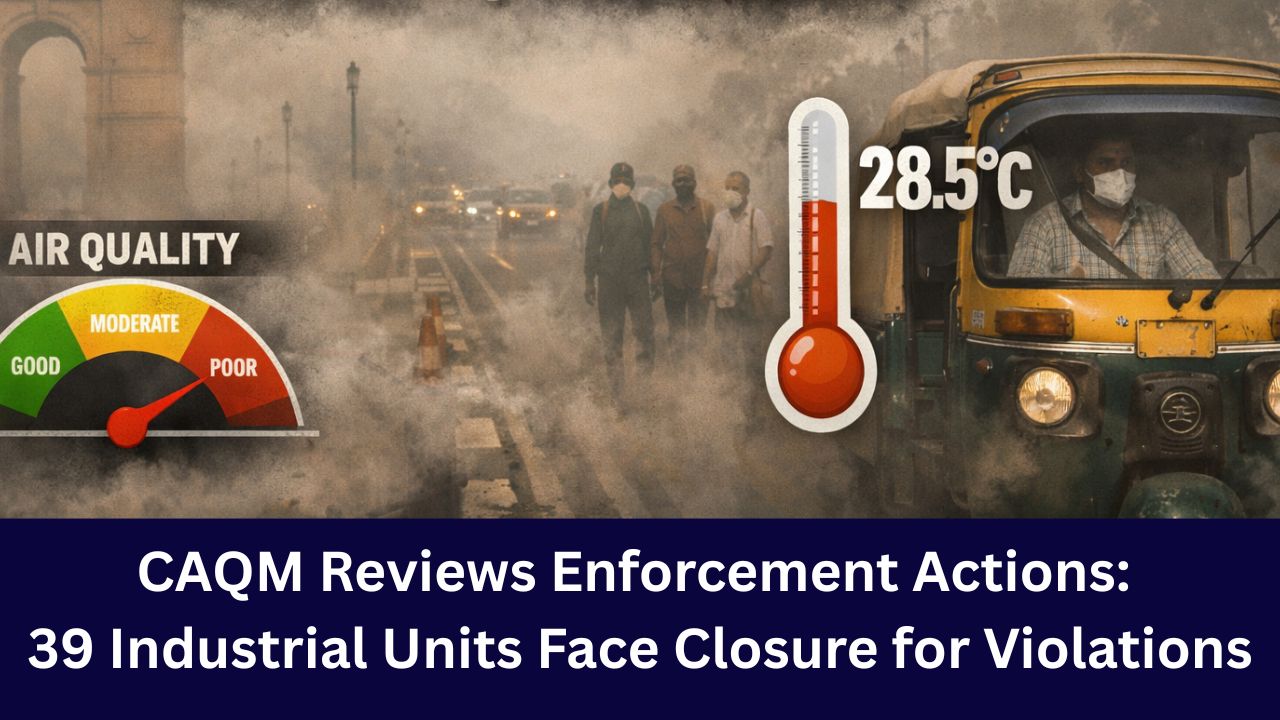
NEW DELHI: The Commission for Air Quality Management (CAQM) intensified its regulatory oversight on Tuesday, holding its 126th Enforcement Task Force (ETF) meeting to review inspection data from across the National Capital Region (NCR). The session focused on evaluating the efficacy of recent pollution control measures and addressing non-compliance across key sectors, including industrial operations and construction.
Enforcement Outcomes and Inspection Data
During the review period of February 4 to February 18, 2026, flying squads conducted 318 targeted inspections. The results of these inspections have triggered significant enforcement actions to curb environmental violations:
- Proposed Closures: Authorities have recommended the immediate closure of 39 industrial units found to violate emission standards.
- Equipment Sealing: The sealing of 10 diesel generator sets has been mandated.
- Administrative Action: 15 units have been issued formal show-cause notices, while an additional 28 cases remain under active examination by relevant regulatory authorities.
The ETF review also assessed the implementation of road dust mitigation protocols, including the deployment of mechanized road sweeping and water sprinkling, specifically targeting high-traffic corridors and known urban pollution hotspots.
Strengthening Regulatory Oversight
The CAQM continues to prioritize a data-driven approach to environmental management. According to cumulative enforcement figures as of February 23, a total of 26,328 entities—ranging from industrial units to construction projects—have been inspected. Since the inception of these intensive drives, 1,686 closure directions have been issued. While 1,290 units have been permitted to resume operations following strict verification of compliance, 123 cases have been formally transferred to the State Pollution Control Boards and the Delhi Pollution Control Committee for final adjudication.
What This Means for Residents
- Compliance Pressure: The rigorous inspection cycle signals that businesses operating in Delhi-NCR must maintain strict adherence to environmental norms to avoid operational disruptions.
- Urban Air Quality: Increased vigilance regarding road dust and industrial emissions is aimed at preventing localized air quality spikes, which directly impact daily AQI levels in dense urban areas.
- Monitoring Transparency: The systematic tracking and public reporting of these enforcement actions provide a clearer view of the regulatory machinery working to stabilize the region’s air quality.
What Happens Next
The CAQM has directed implementing agencies to maintain high levels of on-ground vigilance. Following the 126th ETF meeting, the focus will remain on closing the remaining 28 pending cases and ensuring that units currently under show-cause notice rectify their environmental footprints. Future reviews will continue to assess the effectiveness of the ‘Vayu Rakshak’ drive and other mitigation strategies as the city navigates its ongoing battle for cleaner air.
1. How many inspections did the CAQM conduct in the recent period? Between February 4 and February 18, 2026, the Enforcement Task Force conducted 318 inspections across various sectors in the National Capital Region.
2. What is the status of closure orders issued by the CAQM? To date, 1,686 closure directions have been issued. Of those, 1,290 units have been granted resumption orders after demonstrating compliance with environmental norms.
3. Which sectors are currently under increased scrutiny? The CAQM is prioritizing industrial units, construction and demolition sites, diesel generator set usage, and road dust mitigation measures in high-traffic urban areas.

I’am Siddharth a Air pollution analysts are environmental expert who collect, analyze, and interpret air quality data to identify pollutant sources & develop solutions for reducing atmospheric contamination.