
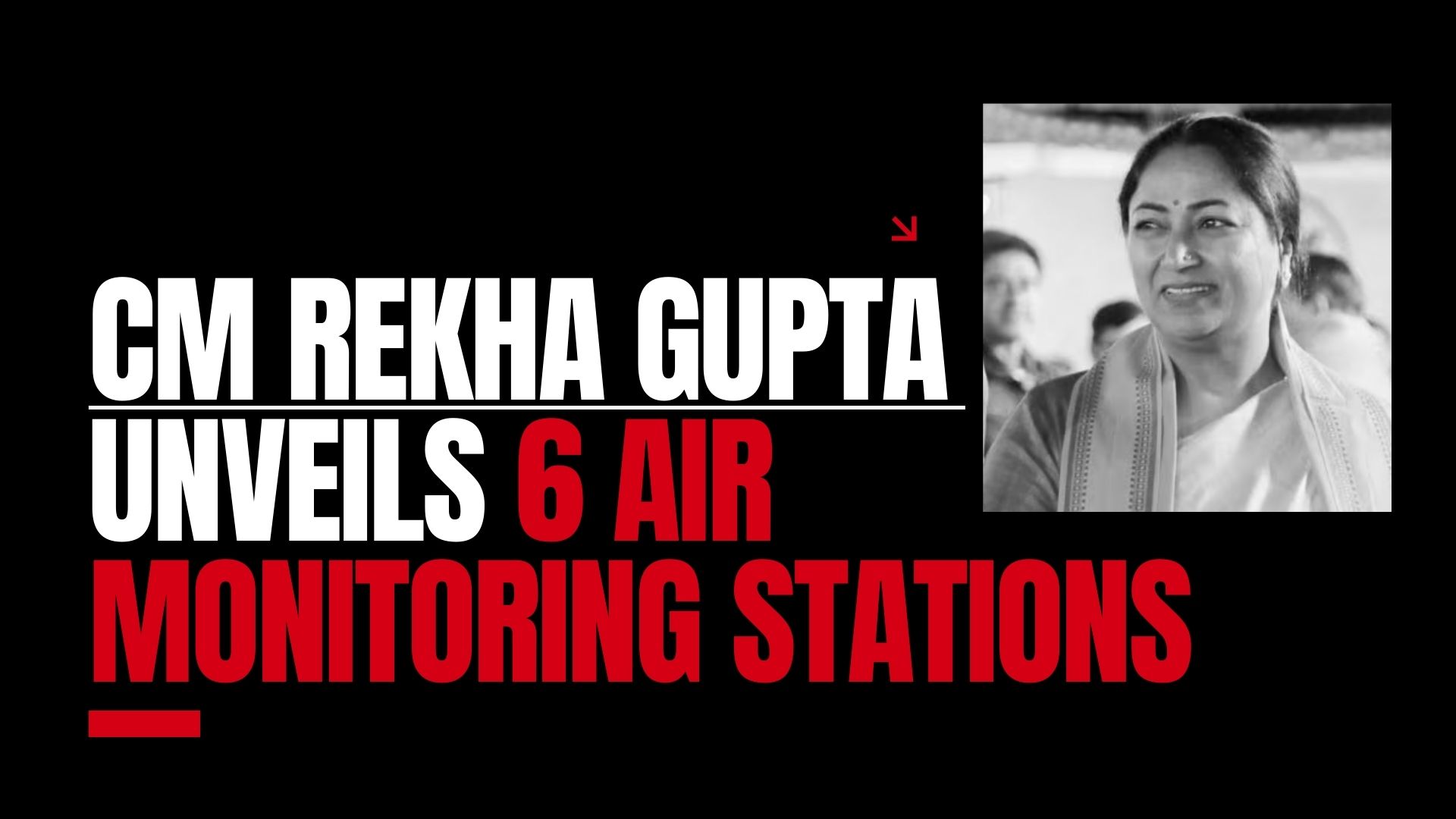
Delhi AQI is a persistent issue
New Delhi — Chief Minister Rekha Gupta on Monday emphasized that air pollution is not a seasonal problem but a year-round challenge while inaugurating six new continuous ambient air quality monitoring system (CAAQMS) stations across the national capital.
The Chief Minister also launched the ‘Vayu Rakshak’ initiative by flagging off 36 vehicles equipped with pollution monitoring teams. Each vehicle will carry three Vayu Rakshaks tasked with monitoring violations of pollution control norms throughout the city.
Vayu Rakshak Initiative Expansion
Around 100 Vayu Rakshak vehicles will be deployed under the initiative as part of the government’s comprehensive efforts to control air pollution. In coordination with the Delhi police, 600 Vayu Rakshaks are already monitoring violations of traffic and vehicular emission norms, according to the Chief Minister’s Office.
Speaking at the Delhi Secretariat event, Ms. Gupta said the government is committed to addressing air pollution on a continuous basis through monitoring, policy intervention, and enforcement. “Providing clean and breathable air to the people of Delhi is the core responsibility of the government,” she stated.

Delhi New Air Monitoring Station Locations
| S.No. | Location | Area Type |
|---|---|---|
| 1 | Jawaharlal Nehru University | Educational/Green |
| 2 | Indira Gandhi National Open University | Educational/Green |
| 3 | Dr. Syama Prasad Mookerjee Swimming Pool Complex | Talkatora Garden |
| 4 | Commonwealth Sports Complex | Akshardham |
| 5 | Sarvodaya Bal Vidyalaya | Delhi Cantonment |
| 6 | Netaji Subhas University of Technology (West Campus) | Dwarka |
Environment Minister Manjinder Singh Sirsa, addressing the event, emphasized that monitoring must be complemented with strict enforcement to achieve tangible results. He said the deployment of 100 Vayu Rakshaks will ensure pollution control measures are implemented effectively on the ground.
Expert Concerns Over Station Placement
However, the initiative has drawn criticism from environmental experts. Environmental activist Bhavreen Kandhari pointed out that the six new CAAQMS stations are located in clean and green areas where air quality is already better than in other parts of the city. “This will lead to the average air quality of Delhi being better on paper without actually reducing air pollution. This is misleading and as good as fudging data,” she said.
Anumita Roychowdhury, executive director of the Centre for Science and Environment, stressed the need to strengthen air quality monitoring in densely populated areas and industrial zones. “If you keep increasing monitoring stations only in green areas, it might artificially improve the average air quality,” Ms. Roychowdhury warned.
Sunil Dahiya, founder of the think tank Envirocatalysts, added that many existing CAAQMS stations are also in greener zones or physically obstructed by tall buildings, which skews their readings.

The debate highlights the ongoing challenge of balancing infrastructure development with accurate environmental monitoring to effectively combat Delhi’s persistent air pollution crisis.
I’am Siddharth a Air pollution analysts are environmental expert who collect, analyze, and interpret air quality data to identify pollutant sources & develop solutions for reducing atmospheric contamination.