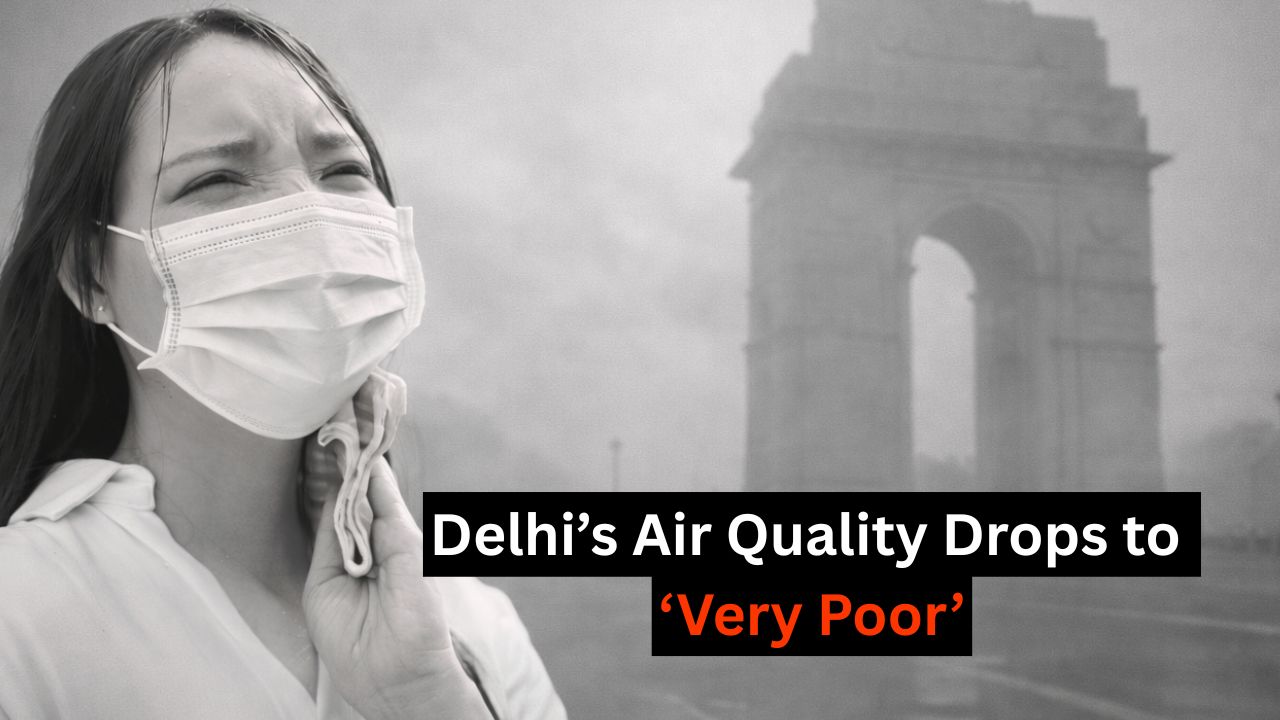
NEW DELHI: Air quality across the National Capital Region (NCR) faced a sharp deterioration on Tuesday, February 24, 2026, as several pockets plunged into the ‘very poor’ category. Despite a shift toward warmer daytime conditions, stagnant pollutants in industrial hubs have prompted renewed calls for immediate regulatory intervention.
Persistent Pollution Pockets
Data from the Central Pollution Control Board (CPCB) highlights that while city-wide averages remain volatile, specific urban hotspots are bearing the brunt of the crisis. Anand Vihar recorded the most severe levels, with an Air Quality Index (AQI) of 331, firmly in the ‘very poor’ category. Other areas, including Wazirpur (310), Mundka (290), Dwarka Sector-8 (286), and Jahangirpuri (274), also reported deteriorating air quality, suggesting that localized pollution sources—such as industrial emissions and construction dust—are failing to disperse despite rising daytime temperatures.
Policy Intervention: Supreme Court’s Shift
The current pollution spike coincides with intensified legal and policy scrutiny. In a landmark development, the Supreme Court of India has directed the Union Government to formulate a comprehensive plan to relocate coal-based industries out of the Delhi-NCR region. A three-judge Bench, led by Chief Justice of India Surya Kant, is also evaluating a proposal to ban coal-based thermal power plants within a 300-km radius of the national capital. These measures, heavily supported by the Commission for Air Quality Management (CAQM), represent a strategic pivot toward long-term pollution mitigation.
Rising Temperatures and Meteorological Impact
Delhi is witnessing a steady transition toward warmer weather as the winter chill fades. The India Meteorological Department (IMD) reports that daytime temperatures are climbing, with maximums expected to range between 29°C and 31°C. While the warmer weather typically aids in the dispersion of pollutants through better thermal mixing, the presence of localized ‘very poor’ AQI levels indicates that emission volumes in specific clusters are currently overpowering these favorable meteorological conditions.
Quick Reference: Current Pollution & Policy Context
| Feature | Details |
| Worst Affected Area | Anand Vihar (AQI 331) |
| Key Pollutants | PM2.5, PM10 |
| Primary Regulatory Focus | Relocation of coal-based industries |
| Next Legal Hearing | March 12, 2026 |
| Meteorological Outlook | Clear skies, temperatures 29°C–31°C |
What This Means for Residents
- Health Precautions: With AQI levels frequently breaching the 300-mark in hotspots, residents—particularly those with pre-existing respiratory or cardiovascular conditions—are advised to avoid prolonged outdoor exertion during peak pollution hours.
- Localized Awareness: Since pollution is not uniform across the city, residents are encouraged to check real-time hyperlocal air quality data before planning outdoor activities.
- Vigilance: The intensified focus on coal-based industries and industrial emission compliance suggests that authorities are prioritizing stricter enforcement to stabilize air quality as the city heads into the spring season.
What Happens Next
The Union Ministries of Environment, Forest and Climate Change, Power, and Petroleum are expected to submit formal responses regarding the Supreme Court’s proposed relocation of coal-based industries. As these high-level policy discussions unfold, the CAQM’s Enforcement Task Force is continuing its on-ground crackdowns on non-compliant units to manage immediate pollution levels.

Nidhi Kapoor is an environmental journalist and air pollution monitoring expert with 8 years of experience. She specializes in collecting, analyzing, and interpreting air quality data to identify pollutant sources and their impact on public health. Through her investigative reporting, Nidhi develops insights and advocates for evidence-based solutions to reduce atmospheric contamination.